
Home Equity Renovation Guide: 7 Smart Upgrades That Can Boost Your Value

Home Equity Remodeling: Turn Your Dream Projects Into Reality
Home equity remodeling is becoming one of the most popular ways homeowners are finally tackling the upgrades they’ve been putting off.
That kitchen you’ve been dreaming about…
The bathroom that needs a refresh…
Or even the outdoor space you’ve been meaning to improve…
What if you already have the resources to make it happen?
Many homeowners today are tapping into their equity instead of draining their savings. In fact, home improvement spending is expected to exceed $522 billion by 2026—and a large portion of that is being funded through equity.
If you’ve owned your home for several years, there’s a good chance you’ve built up more equity than you realize.
What Is Home Equity Remodeling and How Does It Work?
Home equity remodeling starts with understanding what equity actually is.
Equity is the difference between what your home is worth and what you still owe on your mortgage. And right now, homeowners are sitting on significant amounts of it.
Recent data shows the average homeowner has around $300,000+ in equity. That’s a powerful financial tool if used wisely.
Many homeowners are leveraging that equity through:
Home equity loans
HELOCs (home equity lines of credit)
Cash-out refinancing
And one of the most common uses? Home improvements.
In fact, studies show nearly half of homeowners using equity are doing so to upgrade their homes.
But here’s the key: just because you can use your equity doesn’t mean every project is worth it.
Home Equity Remodeling: Why Choosing the Right Projects Matters
Not all upgrades deliver the same return.
When planning home equity remodeling, your goal shouldn’t just be improving your space—it should also be protecting (and ideally increasing) your home’s value.
Even if you’re not planning to sell right away, smart renovations today can pay off later.
This is where working with a real estate agent becomes incredibly valuable. They understand:
What buyers in your market are looking for
Which upgrades help homes sell faster
What actually increases resale value
As industry experts often point out, strategic improvements can significantly impact your final sale price.
Home Equity Remodeling: Projects With the Best ROI
Before jumping into any renovation, it’s important to understand which projects tend to deliver the best return on investment.
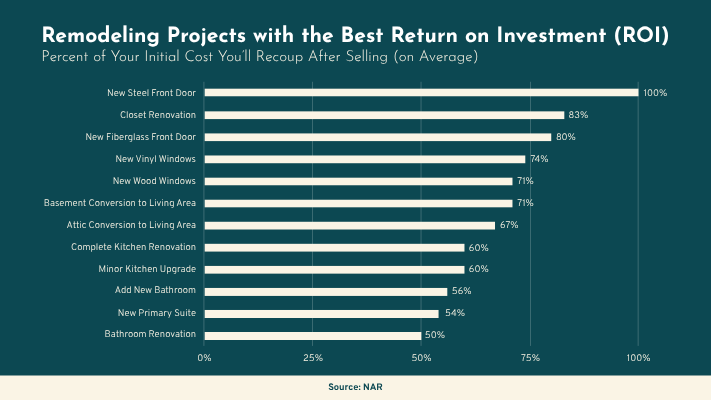
Based on national data, here are some of the top-performing upgrades:
Steel front door replacement (highest ROI)
Closet renovations
Fiberglass front doors
New vinyl or wood windows
Basement or attic conversions
Minor kitchen upgrades
Bathroom additions or renovations
What stands out is the mix of both large and small projects.
For example:
A full kitchen remodel may improve functionality and appeal
But smaller upgrades like doors or windows can deliver surprisingly strong returns
That’s why strategy matters more than size.
Home Equity Remodeling: When to Use Equity (and When Not To)
A smart home equity remodeling plan means knowing when it makes sense to tap into your equity—and when it doesn’t.
Use equity for:
High-impact renovations (kitchens, living spaces, structural upgrades)
Projects that improve functionality and long-term value
Updates that align with buyer demand in your area
Avoid using equity for:
Small cosmetic upgrades
Trend-based changes that may not last
Projects with low return on investment
For example, replacing a front door may offer excellent ROI—but it’s not necessarily worth borrowing against your home to fund it.
On the other hand, a well-planned kitchen renovation could justify using equity because of its long-term value.
Home Equity Remodeling: Talk to the Right Experts First
Before moving forward with any project, it’s important to consult the right professionals.
A real estate agent can help you:
Prioritize upgrades that matter most in your market
Avoid over-improving beyond neighborhood standards
Understand what buyers are actively looking for
A financial advisor or lender can help you:
Evaluate your loan-to-value (LTV) ratio
Understand repayment terms
Ensure you’re making a financially sound decision
Combining both perspectives helps you make smarter, more confident choices.
Final Thoughts on Home Equity Remodeling
Home equity remodeling can be a powerful way to transform your home without draining your savings—but it should always be done strategically.
The goal isn’t to renovate everything.
It’s to invest where it counts.
Whether you’re preparing to sell or simply improving your space, the right upgrades today can position you for greater value tomorrow.
And in many cases, the key to making it happen is already sitting in your home—your equity.